Overview
Acute Humanitarian Response: Responding faster when children need it most
Multi-partner
When conflict, displacement or natural disasters disrupt children's lives, childhood is often one of the first things at risk. Learning is interrupted, routines disappear and the safe spaces children rely on can vanish overnight.
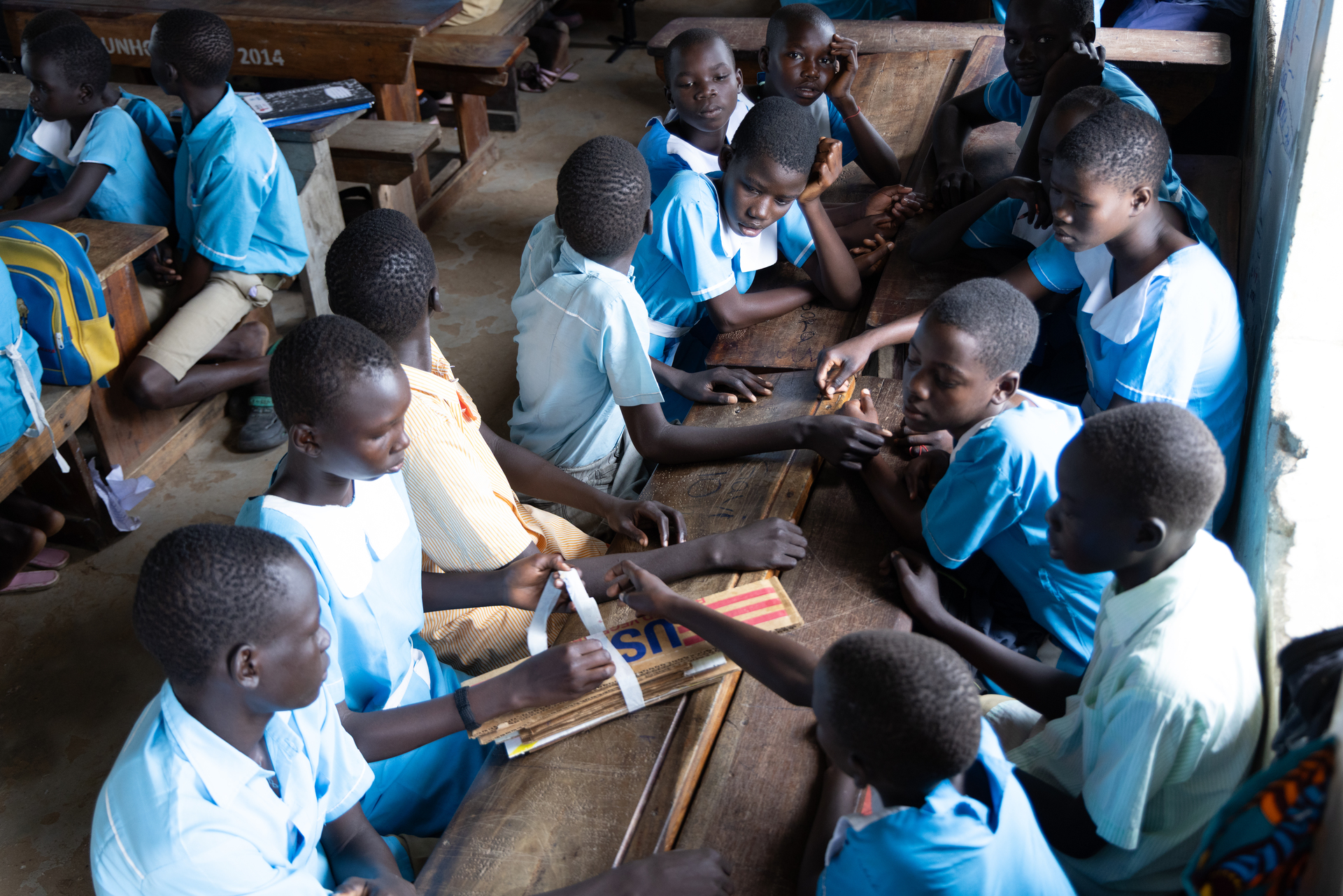
Ready to respond
In an emergency, every day matters. Rather than building new partnerships when a crisis unfolds, we work with trusted organisations that have deep humanitarian expertise and strong local networks. That is why we work with the Norwegian Refugee Council and Save the Children through the Acute Humanitarian Response Mechanism. Together, we have created a way to respond quickly to emergencies, helping children continue to learn, play and regain a sense of safety during some of the most difficult moments of their lives.
Helping children continue to learn, play and recover
Every crisis is different, but our focus remains the same: helping children regain safe opportunities to learn, play and connect with others. Working alongside local partners, the Norwegian Refugee Council and Save the Children assess what children need most, whether that is restoring access to education, creating child-friendly learning spaces, providing mental health and psychosocial support or helping children reconnect through play.
These approaches are grounded in evidence showing that play can support children's learning, wellbeing and resilience, particularly during times of crisis. Together, we have developed a flexible way of working that enables our partners to act quickly while responding to the needs of children and communities in each context. This means support can reach children sooner, when it can make the greatest difference.
Sharing our learnings
The Acute Humanitarian Response Mechanism was created to help children receive support more quickly while giving partners the flexibility to respond to the realities they experience on the ground.
A case study by the Milken Institute highlights the approach as an example of how long-term partnerships, trust and shared planning can help philanthropic organisations respond more effectively to humanitarian crises. It points to the value of preparing before emergencies happen, working closely with experienced partners and balancing a clear strategy with the flexibility needed to respond to different contexts.
Partner: Save the Children and Norwegian Refugee Council
Partnering on the Acute Humanitarian Response Mechanism since: 2024
Geography: Across the world
Interesting fact: The mechanism was originally developed by our partner, International Rescus Commitee , during an emergency response in Tigray, Ethiopia, in 2022. It has also been integrated in newer partnership frameworks with IRC and BRAC.
Funding: DKK 306 million (EUR 41 million) divided equally between the two organisations.